10 Trends Shaping Design in 2027
The proof – a case study
10 Trends Shaping Design in 2027
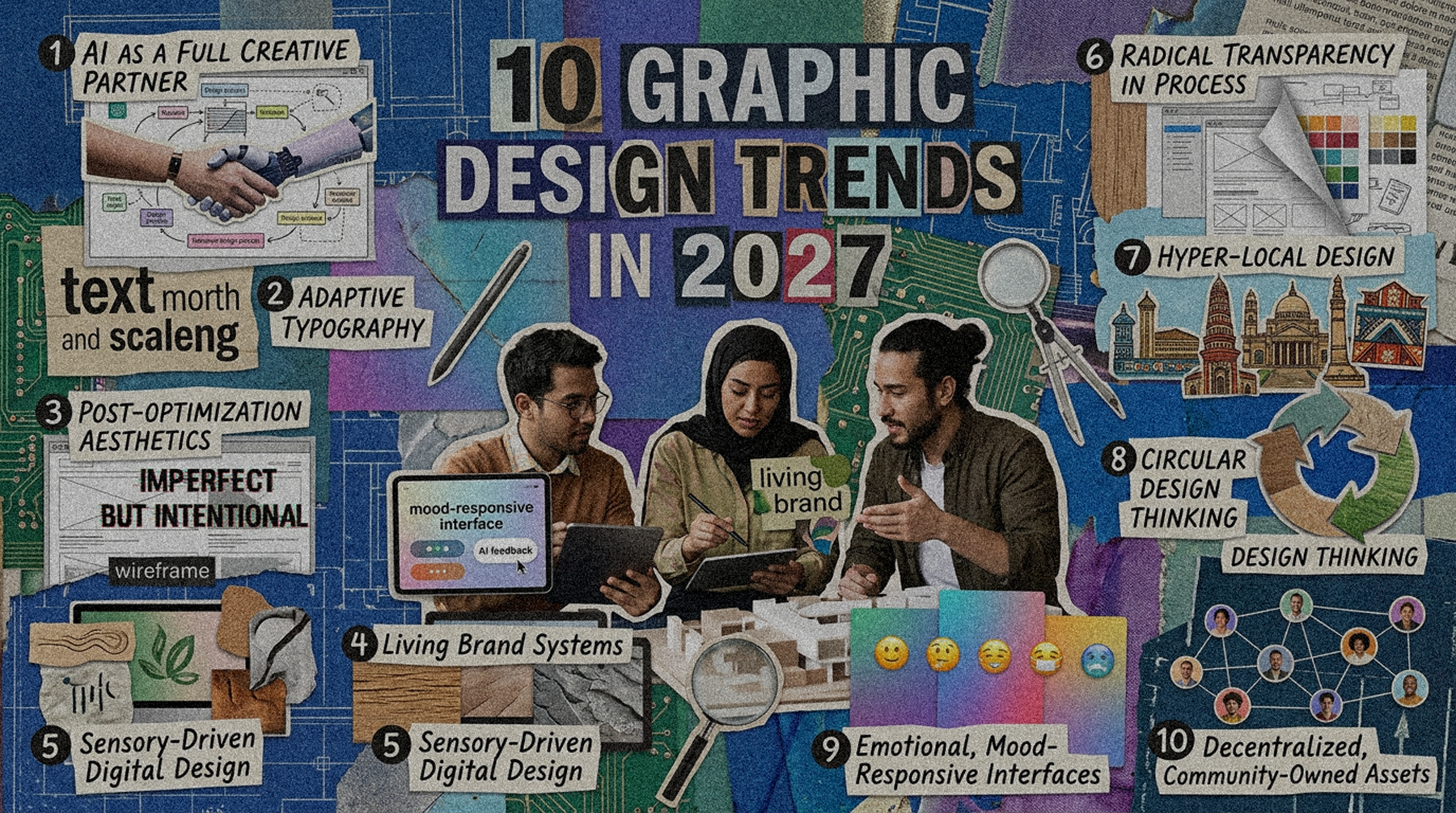
Design keeps moving, and 2027 builds directly on where 2026 left off. Because AI tools matured fast, the conversation has shifted. Instead of asking whether to use AI, most studios now ask how to use it well. As a result, the trends below focus less on tools and more on judgment. Meanwhile, the brands standing out aren’t the ones with the fanciest tech stack. Rather, they’re the ones making deliberate, considered choices with it. So if you’re planning your next brand move, here’s what’s actually shaping the field this year.
1. AI as a Full Creative Partner
Last year, AI mostly sped up drafts. This year, it’s doing more of the actual thinking alongside designers. Because the tools got better, studios are trusting AI with early concepting, not just production. However, human editing still shapes every final decision. Therefore, the skill that matters most now is knowing what to keep and what to cut. Additionally, teams are getting better at briefing AI clearly, since a vague prompt still produces a generic result.
2. Adaptive Typography
Type is starting to respond to its environment, not just sit still on a page. A headline might shift weight or spacing based on screen size, lighting, or even reading speed. Since devices vary so widely, static type increasingly feels like a missed opportunity. Consequently, more brands are building type systems that flex automatically instead of breaking on smaller screens.
3. Post-Optimization Aesthetics
For years, everything got optimized: load times, conversion rates, even color choices. Now, some brands are pushing back against that instinct. Rather than chasing every metric, they’re prioritizing feel over friction-free perfection. Because hyper-optimized design often looks the same everywhere, texture and personality have become a way to stand out.
4. Living Brand Systems
Static brand guidelines are giving way to systems that evolve in real time. A logo might shift slightly based on season, campaign, or even live data. Meanwhile, the underlying rules stay consistent, so the brand never loses coherence. Additionally, this approach treats identity as an ongoing relationship rather than a fixed asset delivered once and left alone. Consequently, style guides are starting to look more like living documents than finished rulebooks.
5. Sensory-Driven Digital Design
Visual design alone is no longer enough for many digital experiences. Instead, sound design and haptic feedback are being built in from the start. For example, a button might have a specific micro-vibration, paired with a matching visual cue. Since so many interactions now happen on phones, this layered sensory approach feels more considered than sight alone.
6. Radical Transparency in Process
Audiences increasingly want to see how a brand actually gets made, not just the polished result. Because trust has become harder to earn, some studios are publishing early sketches, rejected directions, and messy first drafts. As a result, the design process itself has become genuine brand content. Also, this openness builds a kind of credibility that a perfect final reveal alone can’t.
7. Hyper-Local Design
Global sameness is losing its appeal, and local specificity is gaining ground instead. Brands are leaning into regional color palettes, typography, and cultural references rather than defaulting to generic global style. Similarly, packaging and campaigns are being built with real local nuance, not just translated language. Because customers can spot generic globalization instantly, specificity now reads as authenticity.
8. Circular Design Thinking
Sustainability conversations have moved past materials alone and into full lifecycle thinking. Instead of designing something once and discarding it, brands are building modular, reusable systems from the start. For instance, packaging is being designed to be refilled or repurposed, not just recycled. Consequently, circular thinking is shaping decisions much earlier in the design process than before.
9. Emotional, Mood-Responsive Interfaces
Interfaces are starting to adjust based on a user’s apparent mood or context, not just their clicks. A stressed, fast-moving session might trigger a calmer, simplified layout. Otherwise, a browsing, relaxed session might unlock richer visuals and more detail. Because this requires real subtlety, the best examples never feel manipulative or overly clever about it.
10. Decentralized, Community-Owned Assets
Some brands are handing pieces of their visual identity directly to their communities. Instead of a single studio owning every asset, fans and customers are creating variations within a flexible system. As a result, brand assets are multiplying organically instead of being tightly controlled from one source. Additionally, this approach turns loyal customers into active co-creators of the brand itself.